所有 IURC 活动


即將到來


目前没有计划进行任何活动。 查看下面的过去事件。

« 》
的 »
苏 苏MO ,TU ,我们TH 的FR 的SA 的
   12
  • 09:00 -11:00
    2022-06-02

    ??

    ?????????????????????????????????????????????????????????????????????????????????????????????????????


    ???2002?????????????RIS??????????????????????????????????????????????????????????????????????????????????????????????????????????????????????????????????? 2014 ????????????????????????????????????????????????????????????????????????????????????????????????????????????????????????????


    2020?????-?????????????IURC?????IUC???-?????????????????????????????????????????????????????????????????”???”??????????????????


    ??????????????????? IURC China ??????????????????????????????????????????????????????????????


    ????


    ????????????????????????????????????IURC??????????????????????????????????????????????????

    1. ??????????????

    2. ?????????????????????????????


    ???


    1. IURC China??????????????????????????????????????

    2. ???IURC ??????


    ???2022?6?2? ??????3-5?


    ??

    ??

    ???????

  • 09:00 -11:00
    2022-06-02

    BACKGROUND


    In the past two decades, regional innovation development policies have been widely discussed and implemented throughout the world. It is essential for the national and local governments to develop a strong innovation ecosystem, and react to the growing challenges of societies. Nowadays active circulation of know-how and innovation significantly contributes to the regional development and quality of life of the people.


    The EU has implemented the Regional Innovation Strategy (RIS) since 2002 to enable sustainable, inclusive, and smart growth. Regional decision-makers endeavour to adopt regional policies to ensure local thematic priorities and foster innovation, growth, and entrepreneurship and participate in international cooperation network. The European Commission aligned the investment policies to the challenges and needs for knowledge-based regional development and increased the region´s competitiveness with the triple helix approach (interaction of academic, industry and government). Since 2014, China has been developing the strategic regional innovation ecosystem, especially in Bohai Delta, the Yangtze River Delta and the Pearl River Delta. Shandong province also transformed the manufacturing sector from the automobile industry to E-automobiles and Industrial Internet. Learning from the good practices of developing innovation ecosystems in different regions, China is developing its unique regional innovation strategies with the co-evolution of multiple stakeholders.


    In 2020, under the framework of the EU-China Regional Policy Dialogue, a joint study of EU-China Regional Innovation was conducted by IUC (the previous phase of IURC). The study highlighted China´s experience in the regionalization of national innovation policy and the EU´s experience in the role of regions as independent actors developing an independent vision and strategy for innovation.


    This webinar is organized as a part of the IURC China thematic cluster working session, aiming to share how regions achieve green and digital transformation in regional development agendas and discuss how EU-China cooperation can help them to reach the goals.


    OBJECTIVES


    Through deep multilateral discussion, this thematic webinar seeks to showcase challenges and solutions of developing a regional innovation ecosystem, enhance green development, social inclusion and innovation in IURC pilot cities & regions and provide them with a networking opportunity to:

    1. Share perspectives, policy initiatives, and best practices

    2. Identify potential common projects and relevant stakeholders to address the transition to a green and digital economy.


    Participants


    This webinar will take place among?

    1. stakeholders from IURC China pilot cities and regions in the thematic group of Regional Innovation & Smart and Sustainable Specialization Strategies;

    2. invited participants from IURC global community.


    Agenda

    注册 @ info

    Read the highlights from the event

34
567891011
12131415161718
192021
  • All day
    2022-06-21

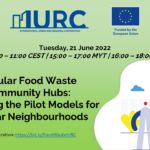
    Tuesday, 21 June 2022 09:00 ? 11:00 CEST | 15:00 ? 17:00 MYT | 16:00 ? 18:00 JST


    Check your local time here.


    In our first thematic webinar Circular City Hubs: Improving Thriving, Liveable, Resilient Urban Centres on 14 December 2021,  participating IURC cities identified cities as centres for innovation hubs. The outcome of the webinar resulted in 13 IURC cities from 9 countries (Australia, India, Indonesia, Malaysia, Thailand, Japan, Finland, New Zealand, Portugal) completing a circular economy cluster spreadsheet for an inclusive stock take. The top three waste streams identified were food waste in 5 cities, waste water treatment in 4 cities and plastic circularity in 3 cities which is connected to food waste.


    Today?s thematic webinar will focus on Southeast Asia cities’ circular food waste community hubs a key locus of circular change to grow Circular Neighbourhoods. Cities from Italy, Portugal, Japan and Malaysia will present the critical activities and deliverables needed to implement and replicate pilot model cities leading in this critical transformation with their communities and F&B outlets under the theme of ?Circular Neighbourhoods?.


    Download the full programme


    Read the highlights, watch the video and download the presentations here.


2223
  • 09:00 -11:20
    2022-06-23

    BACKGROUND


    Both the EU and China are facing three major challenges in the agricultural sector. First, food security challenge: the EU is part of the global food system, whereas China has a daunting task to feed 22% of the world’s population with 9% of the world’s arable land. Second, environmental challenges such as soil degradation, water shortages, biodiversity loss and climate change. And third, high degree of urbanization: 75% of the Europe population lives in cities in and 64% in China, a proportion that is projected to 80% by 2050. These are some reasons why urban agriculture has become a subject of growing interest and a burgeoning sector. Despite the growing awareness worldwide of the potential of urban agriculture, it has yet to fully find its way into policy and practice in both the EU and China.


    In Europe, the ?Europe 2020? strategy laid the groundwork for smarter, more sustainable and inclusive growth. Europe?s Common Agricultural Policy (CAP) focuses on classical agricultural production in rural areas, but also includes implicit chances for urban agriculture, including the development of short supply chains and local markets or the promotion of cooperation activities. The Green Deal with its Farm-to-Fork-Strategy aims to create sustainable food systems stressing the creation of a robust and resilient food system. In China, policy recommendations put urban-rural integrated development and rural revitalization forward, which implies the potential of urban agriculture in solving the issues of urban-rural discrepancy, e.g. the National Sustainable Agriculture Development Plan (2015-2030) which highlights the environmental challenges in the agricultural sector and promotes locally adapted agriculture and circular agriculture. The shorter-term ?National Agriculture Green Development Plan? (2021-2025) or the cross-cutting ?14th Five-Year Plan for Circular Economy Development? (2021-2025) are just other examples of the promotion of a more sustainable, resource-efficient agriculture.


    The webinar is organised as a part of the IURC China thematic cluster working sessions, aiming to share how cities and regions achieve transition towards green, circular and bio-economy and resilient agri-food systems, and discuss how EU-China cooperation can help them to reach the goals.


    OBJECTIVES


    Through deep multilateral discussion, this thematic webinar seeks to showcase challenges and solutions of developing robust and resilient agri-food systems, enhancing green, circular and bioeconomy in IURC pilot cities & regions and provide them with a networking opportunity to:


    1. Share perspectives, policy initiatives, and best practices

    2. Identify potential common projects and relevant stakeholders to address the transition to a green and circular economy.


    Participants


    This webinar will take place among?


    1. stakeholders from IURC China pilot cities and regions in the thematic group of Sustainable urban agriculture and Agri-food systems;

    2. invited participants from IURC global community.


    REGISTER

    AGENDA

    Read the highlights from the event


  • 16:00 -17:30
    2022-06-23

    The webinar took place on 23 June 2022.

    Space

    –> Watch the recording here

    Space

    –> Agenda here 

    Space

    –> More information: aamerico@iurc.nerdline.online

    Space

    Takeaways

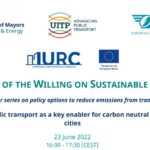
    Transport is one of the Covenant of Mayors for Climate & Energy ? Europe key sectors, representing the 14.5% of actions submitted by Covenant signatories (Covenant in figures) and the 26% of the total emissions in the BEI (JRC, Covenant of Mayors 2019 Assessment). This is why the Covenant of Mayors is working with a wide range of stakeholders in the field of sustainable transport to support signatories to reduce their emissions from the mobility sector.

    Space

    The Covenant Office is organising a series of 5 webinars on policy options to reduce emissions from the transport sector, which kickstarted on 23 June with a focus on public transport.

    Lucie Petersen from UITP set the scene about the decarbonisation of public transport to achieve local climate neutrality targets. Digitalisation, affordability, decarbonising technologies and expansion of the offer are some of the main challenges that hamper the development of a clean buses market in Europe to decarbonise publictransports. Looking at the current status of electric and hydrogen buses? deployment in Europe, there was a ramp-up of e-buses? sales in 2021. As for fuel-cell hydrogen buses, they are still considered expensive by city authorities, despite being increasingly deployed in some Countries such as the Netherlands, Germany and the UK.

    Space

    The session then looked into approaches to increase public transport ridership with two local examples. With 944km of length of bus lines, and around 600k bus passengers per day, the city of Hamburg (Germany) is making itself a pioneer at fostering public transports. Peter Lindlahr (hySOLUTIONS), explained how a mix of investments in electric and hydrogen buses, as well as in electric and hydrogen refuelling infrastructures, will make the city achieve a zero-emissions fleet by 2032. Out of 1,800 buses, 160 are electric, and a further 470 e-buses will be purchased by summer 2025.

    Space

    In Kansas city (US), the routes? long-distance range, the higher capital costs for battery electric buses and the lack of mechanics in the supply chain, make investments in zero-emissions buses harder than in the European context, as explained by AJ Farris (Kansas City Area Transportation Authority).

    The current share of hybrid & electric buses is 3%, and is planned to increase by 2027 in line with the new Regional Climate Action plan and the city?s Climate Protection & Resiliency Plan. To enhance public transport and reduce emissions, in March 2020 Kansas City also implemented a zero-fare policy, making public transportation free for all inhabitants, and a flexible-routes service, where digital technologies allow citizens to reserve tailored routes according to their needs.

    Space

    In the second block of the session, Holger Haubold, from the European Cyclist Federation (ECF), shed some light on the importance of integrated transport systems, for example between bikes and trains, also addressed in the new Rail Passenger Rights? Regulation.Some of the strategies presented in the last ECF?s ?Cyclists Love Trains? report are:having dedicated spaces on board for bikes, reserved parking spots in stations, booking channels to reserve special tickets, and integrated bike-sharing functionalities.

    Space

    Tais Costa from Citinova, 福塔莱萨 · 福塔莱萨 (the 4TH 的 largest city in Brazil) shared how the city is investing heavily to integrate bikes in its public transport system, also as a means to fight special segregation and transport poverty. With free bicycle parking for the whole day in almost all the integration terminals, a public bike sharing system (Bicicletar) free of use with the transport card, and a 14h bike sharing system thought to meet the needs of low-income groups far from the central area (Bicicleta integrada), the city of Fortaleza is radically transforming its public transportation system to reduce the use of cars.
2425
2627
  • All day
    2022-06-27-2022-06-29

    The International Urban and Regional Cooperation programme (previously IUC) financed under the Foreign Partnership Instrument (FPI) and the strategic support from the Directorate-General for Regional and Urban Policy (DG-REGIO) of the European Commission, has contributed to bring together cities and regions from across the globe to work jointly towards achieving the sustainable development goals (SDGs), the New Urban Agenda (as extended voluntary commitment from the European Union), the Urban Agenda for the EU or the European Cohesion Policy objectives.

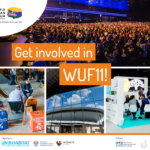
    The World Urban Forum is an opportunity to meet, showcase and network among cities, regions from across the world as well as with their stakeholders. For this 11th edition in Katowice (Poland), IURC and their partners have created a joint programme to foster greener urban futures and facilitate networking at international level.

    Monday 27th 16-17:30h ? International Congress Centre Multifunction Hall, 1st floor, Room 6- Ref. NE 26

    Networking Event: ?International Urban and Regional Cooperation to rethink sustainable urban and innovative models for a greener and better future?

    Learn and exchange how can cities/regions be designed/rethought/co-created to contribute to the transition to net-zero emissions through attractive and financeable pilot projects. After the presentation of Madrid Urban Forest and the Manheim?s initiative on climate-neutral building stock by 2045, representatives from the Climate Finance Gap Fund? European Investment Bank (EIB) and The Urban Resilience Fund (TURF), MERIDIAM will provide feedback on the case studies exposed, providing opportunities and areas of improvement in order to make these projects eligible to receive funding from an investor perspective.

    Public event. Max. capacity 100. Find out more about this event here.

    Tuesday 28th 17:00-18:30h. ? Metrolab zone at the Scientific Information Center and Academic Library CINiBA)- Bankowa 11a, 40-007 Katowice

    IURC Networking Coffee at Metrolab

    Our partner Metropolis GZM will offer a Networking Coffee supported by the IURC team who will be facilitating exchanges and contacts for those joining similar thematic clusters.
    IURC members event. Max. capacity 40.

    Wednesday 29th 11:00-12:30 ? Located in the International Congress Centre ? Ground floor

    European Track eventJust move: ensuring nobody is left behind in the shift toward sustainable urban mobility

    To reach the European climate neutrality goals, cities will have to undergo a fast paced and profound paradigm shift in the urban mobility realm. While being faced with the urgency of the climate crisis, it is of paramount importance that the transition towards more sustainable urban mobility will take into account and cater for everybody?s needs, ensuring nobody is left behind. In this session we will discuss with cities what steps they are taking to transform their transport systems to become more accessible, affordable, safe and inclusive while supporting the transition towards a climate neutral Europe.

    REGISTRATION

    1st REGISTER FOR THE WORLD URBAN FORUM HERE (Before 22 June)

    2nd REGISTER FOR OUR EVENTS HERE (Before 20 June ? due to limited capacity of the rooms)

282930  

过去 的


  • 网络 研讨 会

9月10日

在世界各地,城市越来越受到极端天气和城市洪水的挑战。 创新的基于自然的解决方案(NbS),如雨林,绿色屋顶,生物保留群和蓝绿色基础设施被证明是低能耗,具有气候弹性的方法,不仅可以降低洪水风险,还可以提供多种社会,环境和社区效益。 在本次关于NbS的IURC NA网络研讨会上,我们将探讨领先城市如何将创新付诸实践: 大型城市如何大规模实施法定要求。 怎么...
在世界各地,城市越来越受到极端天气和城市洪水的挑战。 基于自然的创新解决方案(NbS),例如雨水。
  • 网络 研讨 会

9月10日

曲线的未来是数字化的吗? 加入我们的IURC NA Webinar路边似乎只是人行道的边缘,但它已经成为我们城市中最具争议和机会丰富的空间之一。 曾经主要用于停车,今天它是前线:   · 电子商务交付 · 公共交通和自行车基础设施 · 户外餐饮和社会生活 · 绿色基础设施的气候韧性 随着需求的增长和传统的静态管理不再足够,...
曲线的未来是数字化的吗? 加入我们的IURC NA Webinar路边似乎只是...
  • 网络 研讨 会

9月3日

IURC亚洲和澳大拉西亚(AA)正在举办在线启动活动,向参与的城市和地区介绍该地区及其专题集群网络。 该活动标志着主题集群学习阶段(匹配)的开始,IURC AA项目将通过一系列连接欧盟和非欧盟城市和地区的在线网络研讨会主办该阶段,以共同应对城市和区域挑战。 本次活动将帮助参与者更好地了解该计划的新方法,...
IURC Asia & Australasia(AA)正在举办一个在线启动活动,介绍该地区及其专题组...
  • 网络 研讨 会

5月7日

探索建筑库存现代化和创造经济适用房的循环性方面取得了一些令人兴奋的进步,但广泛采用建筑和翻新实践还有很长的路要走,这些做法可以节约资源,最大限度地减少浪费,减少碳排放,增加建筑物的耐用性和寿命,同时具有成本效益。 城市在这种转型中起着至关重要的作用,因为他们试图解决经济适用房的挑战,老化的建筑存量和追求...
探索使建筑库存现代化和创造经济适用房的循环解决方案,在循环性方面有一些令人兴奋的进步。
  • 网络 研讨 会

3月19日

城市交通的未来正在迅速发展,共享交通处于这一转型的最前沿。 来自可持续城市交通和交通(Sumt)IURC-NA网络的专家齐聚一堂,进行了一次富有洞察力的网络研讨会,以探索将共享交通整合到城市政策中的最新策略。 随着城市拥抱电动微型交通和共享交通,讨论强调了这一转变的机遇和挑战。 活动的主要内容包括: ? 慕尼黑的教训? 城市如何成功实施共享移动解决方案...
城市交通的未来正在迅速发展,共享交通处于这一转型的最前沿。 专家从…
  • 网络 研讨 会

2月19日

改造未充分利用或废弃的城市空间是一项普遍的挑战,无论城市的规模或规模如何。 这些领域通常意味着尚未开发的社会经济增长,环境可持续性和社会融合的机会。 如果不加以解决,它们就可能成为社区内部不平等和分裂的鲜明象征。 加入我们参加IURC NA城市规划网络的第二次网络研讨会,在那里我们将回顾振兴退役工业场所,废弃军事设施和马德里,都柏林,多伦多,罗马的空置公共建筑的成功例子。
改造未充分利用或废弃的城市空间是一项普遍的挑战,无论城市的规模或规模如何。 这些地区经常…
  • 网络 研讨 会

9月25日

循环经济越来越受欢迎,因为它的基本原则,如设计废物和污染,保持产品和材料的使用,再生自然系统,可以应用于各种规模,潜在的好处是广泛的。 考虑到市政府的核心能力,城市可以在循环经济中发挥全面的作用,促进循环经济并充当榜样,促进联系和建立多层次治理,以协调优先事项和政策一致性,通过调动资源,调整监管框架,创造适当的治理条件。
循环经济之所以受欢迎,是因为它的基本原则,如设计废物和污染,保持产品和材料。
  • 网络 研讨 会

6月20日

6月20日加入我们,参加一场关于经济适用房的网络研讨会,这是城市规划的关键因素,对社会公平,经济稳定和社区福祉产生深远影响。 了解经济适用房的范式转变是必要的和可实现的。 了解高品质,经济适用房如何促进居民的积极行为改变,使整个社区和社区受益。 我们还将讨论人口增长和某些城市无家可归者的增加如何要求通过非传统住房更快地发展经济适用房。
6月20日加入我们,参加经济适用房的网络研讨会,这是城市规划的关键要素。
  • 网络 研讨 会

1月24日

在过去的三年中,合作,投资和知识共享在与循环经济(CE)相关的主题上成倍增加。 网络,知识共享中心和培训工具正在揭示CE在废物和水管理,土地使用规划,运输,基础设施和建筑,农业和粮食系统等领域的创新和最佳做法。 作为IURC NA网络一部分的城市和地区有能力为这一全球转型做出贡献,通过促进和提高循环性。
在过去的三年中,合作,投资和知识共享在与循环经济(CE)相关的主题上成倍增加。
  • 网络 研讨 会

1月10日

邀请您参加2024年第一届IURC-NA网络研讨会,重点讨论国际合作以及如何与未来的可持续和弹性城市相关联! 气候变化和环境恶化已成为城市发展计划的核心。 因此,欧盟的IURC计划促进了国际上的挑战和解决方案的交流,以加速减少净温室气体排放并改善城市地区的生活质量。 2024年的第一次在线会议将是一个机会...
邀请您参加2024年第一届IURC-NA网络研讨会,重点是国际合作以及如何联系...
加载 更多
本网站注册于 wpml.org 作为一个开发网站。 切换到生产站点密钥到 删除此横幅.